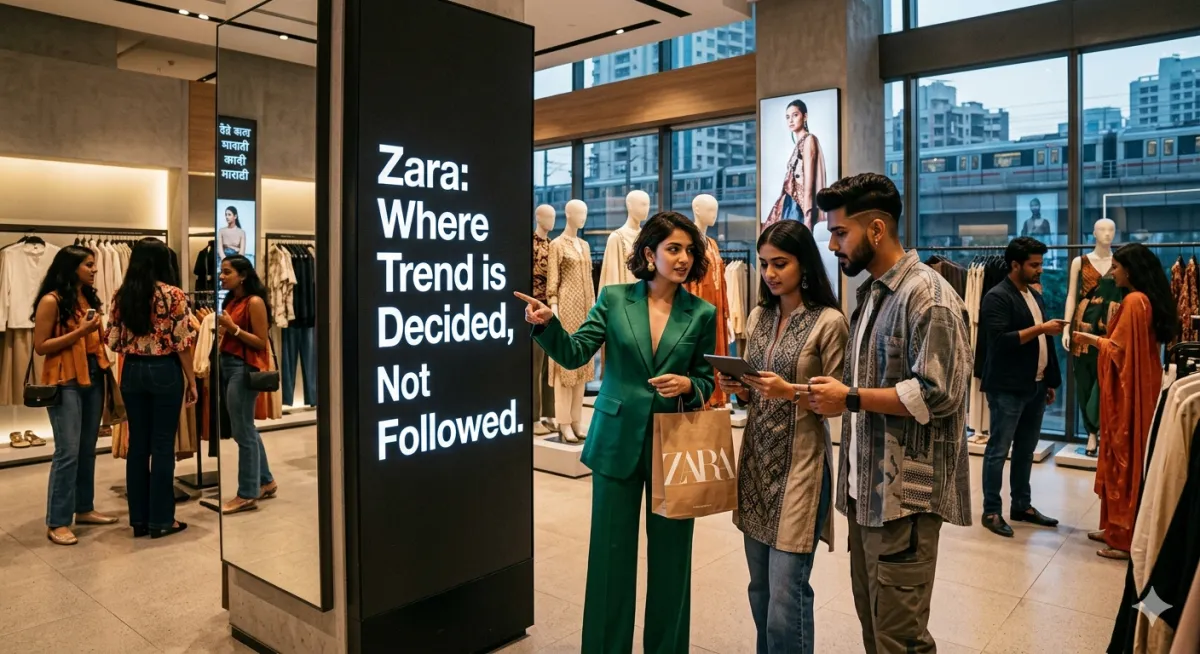
Why Zara Doesn’t Follow Trends—It Controls Them
Why Zara Doesn’t Follow Trends—It Controls Them
Most fashion brands wait for trends to emerge, then scramble to catch up. Zara flipped that model—and in doing so, quietly rewired how modern fashion works.
This isn’t about “fast fashion.” It’s about control, speed, and cultural timing.
1. Zara Doesn’t Predict Trends—It Listens in Real Time
While others rely on seasonal forecasts, Zara treats the market like a live conversation.
Store managers report what customers are asking for—daily
Sales data feeds directly into design decisions
Social signals are observed, not blindly copied
The result? Zara doesn’t chase trends. It responds to demand before it becomes a trend.
2. Speed Isn’t a Tactic—It’s the Core Strategy
Most brands operate on 4–6 month production cycles. Zara works in 2–3 weeks.
That changes everything:
Designs hit stores while the trend is still rising
Inventory stays fresh—customers always see something new
Competitors look outdated before they even launch
Speed gives Zara first-mover advantage without the risk of guessing wrong.
3. Limited Supply Creates Psychological Urgency
Zara doesn’t overproduce. And that’s intentional.
Smaller batches = lower risk
Scarcity = higher perceived value
Customers buy immediately because they know it won’t last
This creates a powerful loop:
“If I don’t buy now, it’s gone.”
Most brands try to push demand. Zara lets scarcity pull it.
4. Design + Production Live Under One Roof
Unlike traditional brands that outsource heavily, Zara keeps tight control over its supply chain.
Designers, production, and logistics are closely integrated
Decisions happen faster, with fewer delays
Feedback loops are almost instant
This vertical integration is why Zara can move at a speed others simply can’t match.
5. Stores Are Not Just Stores—They’re Data Engines
Zara’s retail spaces aren’t just for selling—they’re for learning.
What gets picked up but not bought
What sells out instantly
What customers ignore
Every interaction becomes insight.
Every insight becomes the next collection.
6. Marketing Is Minimal—Product Does the Talking
Zara doesn’t rely heavily on big ad campaigns or influencer noise.
Instead:
Clean visuals
Premium store experience
Constant product refresh
The brand builds desire through presence, not persuasion.
The Real Reason Zara Controls Trends
Zara doesn’t “control trends” in the traditional sense.
It controls timing—and timing is everything.
By the time others identify a trend, Zara has already:
Designed it
Produced it
Sold it
That’s not trend-following. That’s trend acceleration.
What Brands Can Learn From This
Most brands are stuck in a cycle of:
Observe → Plan → Produce → Launch (too late)
Zara operates on:
Observe → Execute → Adapt (in real time)
If you want to compete today:
Stop over-planning
Build faster feedback loops
Treat your audience like a live signal, not a report
Classic Hub Take
At Classichub, we see this mistake constantly—brands obsess over trends instead of systems.
Zara didn’t win because it’s creative.
It won because it built a machine that turns culture into product faster than anyone else.
That’s the real edge.
#ZaraStrategy #FashionMarketing #BrandPsychology #FastFashion #ClassicHub


