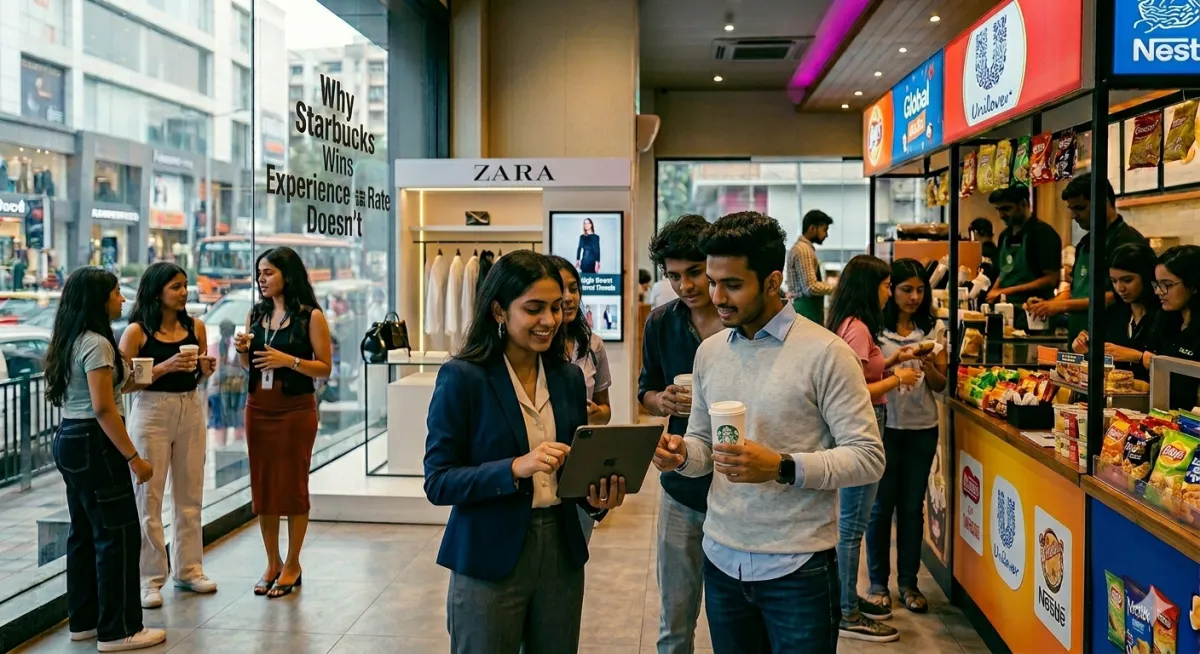
The Gen Z Playbook: What Every Brand Can Learn from Zara & Food Giants
The Gen Z Playbook: What Every Brand Can Learn from Zara & Food Giants
Gen Z doesn’t buy like any generation before them.
They scroll fast, judge faster, and commit only when something feels right instantly.
Most brands are still trying to “convince.”
Gen Z has already decided.
If you want relevance, stop selling the old way. Start operating like brands that already cracked the code—like Zara and modern food giants.
Zara Doesn’t Predict Trends. It Reacts to Them.
Zara’s edge isn’t creativity. It’s speed.
Designs go from idea to store in weeks
Collections change constantly
Scarcity drives urgency
What you see today may not exist tomorrow
This taps directly into Gen Z psychology: FOMO > Loyalty
They don’t want what’s always available.
They want what feels now.
Most brands? Still stuck in quarterly planning cycles.
By the time you launch, Gen Z has moved on.
Food Giants Win on Cravings, Not Campaigns
Look at brands like McDonald's or Domino's Pizza.
They don’t overcomplicate.
Visual-first marketing (you see it, you want it)
Instant gratification (fast delivery, easy ordering)
Consistency (you know exactly what you’ll get)
Hyper-local adaptation (menus change by geography)
They understand a simple truth:
Gen Z doesn’t plan desire—they react to it.
Real estate, D2C, and most brands?
Still writing long descriptions nobody reads.
Attention Is the New Currency—and You’re Wasting It
Gen Z attention span isn’t “low.”
It’s selective.
They will binge 8 hours of content—but skip your ad in 2 seconds.
Why?
Because:
You’re slow to communicate
You’re unclear in value
You look like everyone else
Zara grabs attention with newness.
Food brands grab attention with cravings.
You’re still trying to grab attention with “features.”
That’s the disconnect.
The Real Playbook (That Most Brands Ignore)
1. Speed Is Strategy
Zara wins because it moves faster than culture.
If your marketing, product, or response time is slow—you’re invisible.
2. Visual First. Always.
Food brands don’t describe—they show.
Gen Z doesn’t read. They scan.
If your content isn’t instantly understandable, it’s ignored.
3. Create Urgency, Not Comfort
Zara thrives on limited availability.
If your product is always there, it’s always postponed.
4. Reduce Friction to Zero
Domino’s made ordering effortless.
Every extra step in your funnel kills conversion.
5. Personalization Without Effort
Gen Z expects relevance without asking for it.
If your messaging feels generic, you’re out.
Where Most Brands Fail (Brutally)
They think:
“Better product” = more sales
“More information” = better decisions
“More time” = higher trust
Gen Z operates the opposite way:
Faster beats better
Clear beats detailed
Instant beats delayed
If you’re not aligned with this shift, you’re not even in the game.
The System Behind the Scenes
Here’s what Zara and food giants quietly mastered:
They don’t rely on people to perform perfectly.
They build systems that make performance predictable.
This is where platforms like Autostream become critical.
Instant responses to inbound interest
Automated, behavior-based follow-ups
Real-time engagement across channels
Consistent brand experience at scale
Because Gen Z doesn’t give second chances.
You either respond now—or you’re forgotten.
Final Thought
Zara wins by staying culturally relevant.
Food giants win by staying instantly accessible.
Both win because they remove friction between desire and action.
That’s the real Gen Z playbook.
And right now, most brands aren’t losing to competition—
they’re losing to delay, complexity, and irrelevance.
#GenZMarketing #BrandStrategy #CustomerExperience #D2C #Autostream


