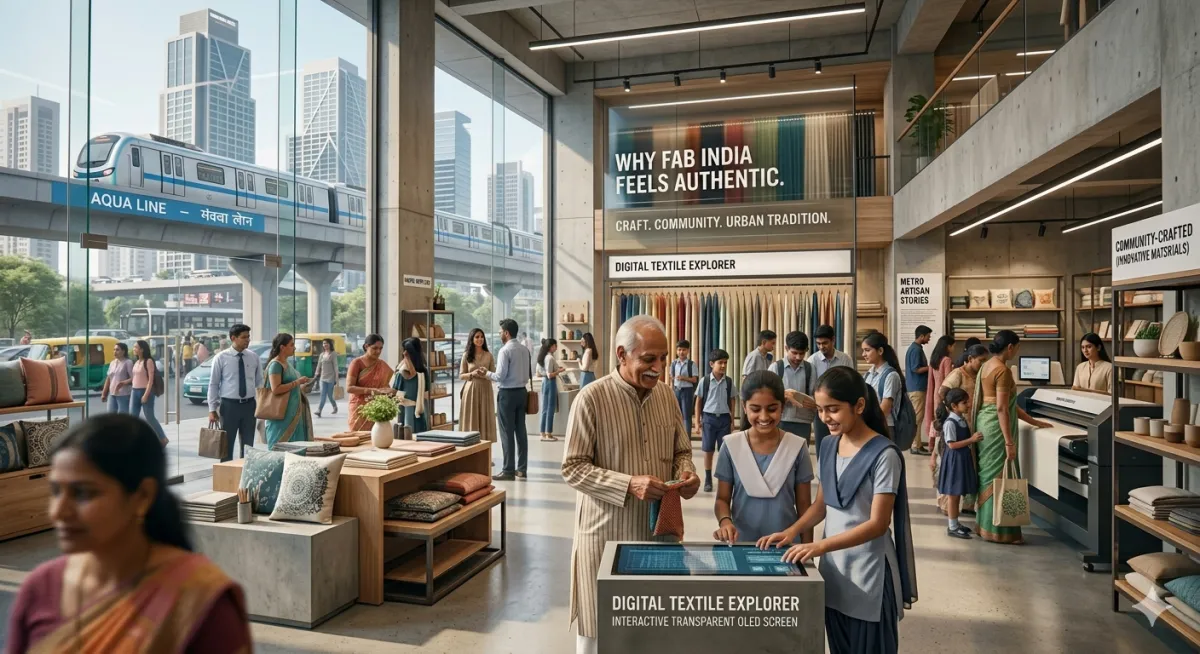
Why Fabindia Feels Authentic While Others Feel Manufactured
Why Fabindia Feels Authentic While Others Feel Manufactured
In a market full of brands trying to look “Indian,” Fabindia feels Indian without trying too hard.
That is the difference.
Many brands use culture like decoration.
Fabindia uses culture like a foundation.
And that is why it has built a space that feels real, rooted, and difficult to copy.
Authenticity Is Not a Design Style
A lot of brands think authenticity means adding earthy colors, ethnic patterns, handmade fonts, or festive music.
But consumers can feel when culture is only used as packaging.
Fabindia works because its brand story is not built around a campaign idea. It is built around a real ecosystem — artisans, handwoven fabrics, Indian craft, natural textures, and everyday ethnic living.
The brand does not scream, “Look, we are traditional.”
It simply behaves like it.
The Product Carries the Story
For Fabindia, the product itself does the storytelling.
A kurta does not look like it was created only for an Instagram post.
A bedsheet does not feel like a seasonal trend.
A handmade product does not feel mass-produced and then dressed up as premium.
That is the real advantage.
When the product has cultural depth, the marketing does not need to over-explain.
Others Manufacture Culture. Fabindia Lives It.
Many lifestyle brands chase “Indian aesthetics” because they know there is demand for rooted, handcrafted, slow-fashion experiences.
But the problem is this:
They copy the visual codes, not the cultural truth.
They use block prints, festive models, Indian homes, and traditional props. But the feeling still looks artificial because the brand has no deeper reason to exist in that space.
Fabindia feels authentic because the brand is not borrowing from culture.
It is built from it.
The Pain Behind the Pain
The surface problem for many brands is:
“Our ethnic campaign is not connecting.”
But the deeper problem is:
The audience does not believe you.
People do not reject Indian-inspired branding.
They reject fake depth.
Today’s consumer can sense when a brand is using culture only to sell. Especially in fashion, lifestyle, food, and home décor, the audience is not just buying a product. They are buying identity, belonging, and taste.
If the brand story feels manufactured, the product feels less valuable.
What Brands Can Learn From Fabindia
The lesson is not “copy Fabindia’s look.”
That would be the biggest mistake.
The lesson is to build from truth.
If your brand is about craftsmanship, show the maker.
If your brand is about legacy, show the journey.
If your brand is about Indian culture, do not reduce it to festive colors.
If your brand is about premium quality, let the product prove it before the copy says it.
Authenticity is not created in the caption.
It is created in the supply chain, product choices, visual language, tone of voice, and customer experience.
Classic Hub Takeaway
At Classic Hub, we believe branding should not just look good. It should feel believable.
Because in 2026, customers are not only asking,
“Is this product good?”
They are also asking,
“Does this brand feel real?”
Fabindia wins because it understands one powerful truth:
When a brand is rooted, it does not need to act authentic.
#Fabindia #BrandStrategy #ClassicHub #IndianBrands #AuthenticBranding #MarketingStrategy


